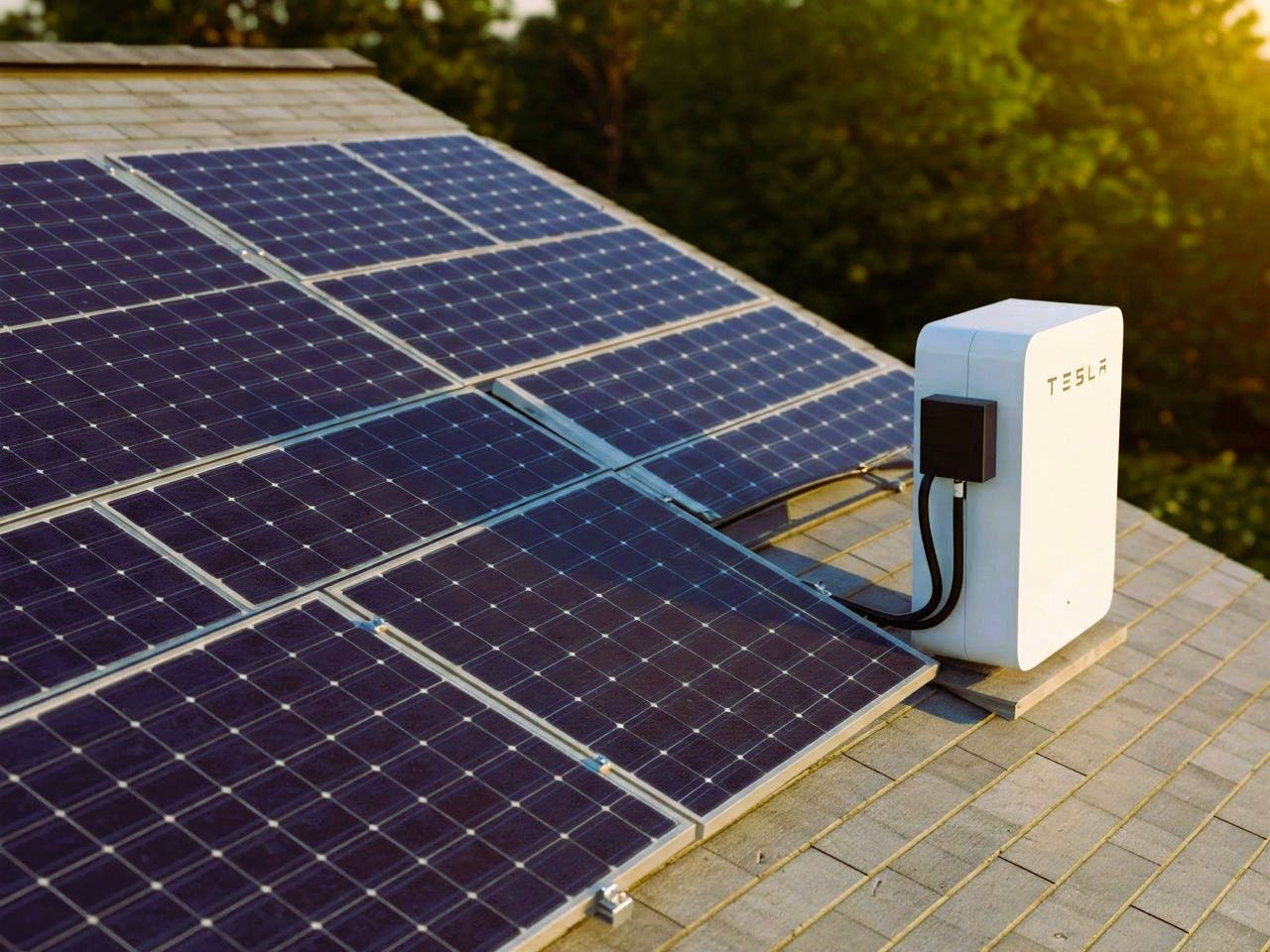
Solar panels generate electricity during daylight hours, but household energy use doesn’t stop when the sun goes down. Solar batteries bridge that gap by storing excess solar energy so it can be used later: at night, during cloudy weather, or when the grid goes down.
Battery storage adds flexibility and resilience to a solar system. Instead of relying entirely on the utility grid after sunset, homeowners can draw from stored solar energy, reducing grid dependence and improving energy predictability.
Understanding how solar batteries work helps you decide whether storage fits your long-term energy goals.
How Solar Batteries Store and Use Energy
A solar battery captures excess electricity produced by your solar panels and stores it for later use. Without a battery, unused solar energy is typically sent back to the utility grid through net metering. With storage, that energy stays available inside your home.
During the Day
Solar panels generate electricity as sunlight hits them. Your home uses that power first. If production exceeds usage, which is common during midday — the extra energy either charges the battery or exports to the grid, depending on system settings.
In the Evening and Overnight
Once solar production drops, the battery automatically supplies stored energy to your home. This reduces the need to draw power from the grid during nighttime hours when you can’t generate solar.
During Power Outages
When the grid goes down, a battery-backed system can continue supplying power to selected circuits or, in some configurations, the entire home. Batteries switch on automatically and operate quietly, without fuel or manual intervention.
Unlike generators, solar batteries provide seamless backup that doesn’t require you to do anything when the power fails.
Core Components of a Solar Battery System
A battery works as part of a larger solar setup, not as a standalone device.
Solar Panels generate electricity from sunlight.
Inverter converts DC electricity from panels and batteries into usable AC power for your home. Some battery systems use integrated inverters; others work with your existing solar inverter.
Battery Storage holds excess energy in lithium-based cells for later use. Most home batteries today use lithium iron phosphate (LFP) chemistry, which offers long cycle life and stable performance, or lithium-ion (NMC) chemistry, which provides higher energy density in a smaller footprint.
Energy Management System controls when energy is stored, used, or exported based on your settings, time-of-use rates, and grid conditions.
Each component coordinates automatically so energy flows where it’s needed without manual switching.
How Long Can a Solar Battery Power Your Home?
Battery runtime depends on capacity, household usage, and system configuration.
A single battery can typically power essential circuits, lighting, refrigeration, internet, and small appliances, for several hours to a full day. Homes with higher energy demands or full-home backup needs often install multiple batteries.
Rather than thinking in hours alone, battery storage is best understood as energy flexibility. Batteries let you shift when and how you use grid power, reducing peak-rate purchases and providing resilience during outages.
Batteries, Net Metering, and Energy Strategy
Solar batteries don’t replace net metering — they change how you interact with it.
Instead of sending all excess energy to the grid, batteries let you store energy and use it later, particularly during peak-rate periods. For homeowners on time-of-use (TOU) rate plans, common with PECO, PSE&G, and JCP&L, this creates meaningful savings.
TOU rates charge more for electricity during evening “peak” hours (typically 4–9 PM) when demand is highest. With battery storage, you can use solar energy stored during the day instead of buying expensive grid power during those peak windows.
Net metering rules and compensation structures vary by utility and may change over time. Batteries add control by reducing your exposure to policy changes while still allowing you to participate in net metering when it benefits you.
Can Batteries Be Added to Existing Solar Systems?
In many cases, yes.
Most modern solar systems are battery-ready, meaning storage can be added without replacing your inverter. Older systems, particularly those installed before 2018, may require inverter upgrades or additional equipment.
Battery additions should always be evaluated based on system design, electrical capacity, and long-term goals rather than short-term incentives alone. A professional system review determines compatibility and cost.
Are Solar Batteries Worth It?
Battery storage is most valuable for homeowners who:
- Experience frequent power outages — especially in areas prone to storms, ice, or grid instability
- Have time-of-use electricity rates — PECO and PSE&G TOU plans make batteries financially compelling
- Want greater energy independence — batteries reduce reliance on the grid and provide peace of mind
- Plan to stay in their home long-term — storage value compounds over years of ownership
While batteries involve additional upfront investment, they offer reliability, control, and protection that grid-only systems can’t provide.
How Sunwise Energy Can Help
Sunwise Energy helps homeowners evaluate whether battery storage makes sense based on energy usage, utility rate structure, outage history, and long-term goals. We design solar and storage systems that work together efficiently, without pressure or guesswork.
Call (610) 228-2480 ext. 1 or schedule a battery consultation to explore your storage options with confidence.
Frequently Asked Questions
How long does a solar battery last during an outage?
A single home battery can power essential circuits for several hours to a full day, depending on battery capacity and household usage. Homes needing full backup typically require multiple batteries.
Can I add a battery to my existing solar system?
In many cases, yes. Most modern solar systems are battery-ready. Older systems may require an inverter upgrade or additional equipment. A professional review determines compatibility.
Do solar batteries work during power outages?
Yes. When paired with solar panels, battery systems automatically switch to backup mode during outages, supplying stored energy to your home without manual intervention.
Are solar batteries worth the investment?
Batteries are most valuable for homeowners who experience frequent outages, have time-of-use electricity rates, or want greater energy independence. The financial case depends on local utility structure and energy goals.
What’s the difference between lithium-ion and LFP batteries?
Lithium iron phosphate (LFP) batteries offer longer cycle life and greater thermal stability. Lithium-ion (NMC) batteries provide higher energy density in a smaller size. Both are proven technologies for home storage.