
New Roof and Solar Installation: Why Bundling Makes Sense
Installing a new roof and solar panels together saves money, simplifies the project, and aligns system lifespans. Learn why bundling makes sense.
In this article
If you are considering solar and your roof is more than 10 to 15 years old, the sequencing of the two projects is worth planning deliberately. Coordinating them often costs less than doing them separately.
Solar panels are designed to last 25 to 30 years. Your roof should be able to match that lifespan. Installing solar on an aging roof means you’ll likely need to remove and reinstall those panels later when roof replacement becomes unavoidable. That’s added cost, added complexity, and added downtime, all of which can be avoided by bundling both projects together.
For homeowners in Pennsylvania, New Jersey, and Delaware evaluating solar, understanding when and why to combine roof replacement with solar installation is one of the most important financial decisions you’ll make.
Why Roof Condition Matters for Solar
Solar panels add weight, mounting hardware, and long-term exposure points to your roof. Every penetration, each bolt securing your racking system, must be properly flashed and sealed to prevent water intrusion.
On a new roof, these penetrations integrate cleanly into fresh materials designed to last decades. On an aging roof, those same penetrations introduce risk into materials already showing wear.
More importantly, solar panels are meant to stay in place. Once installed, removing them requires specialized labor, electrical disconnection, and careful handling. If your roof fails before your solar system reaches mid-life, you’re facing:
- Panel removal and storage costs
- Standard roof replacement costs
- Panel reinstallation and reconnection costs
- Potential system downtime during the process
Bundling roof and solar eliminates all of these future expenses by starting with a foundation designed to last as long as the system itself.
The Cost Advantage of Installing Roof and Solar Together
At first glance, combining two major projects seems like a larger commitment. In practice, bundling almost always reduces total lifetime cost.
Avoiding Future Panel Removal Costs
Panel removal and reinstallation typically costs $2,000–$5,000 or more depending on system size and roof complexity. This expense delivers no added value, you’re paying to put the same panels back in the same place.
Bundling eliminates this cost entirely. Panels are installed once, on a stable surface, and stay there for their full productive lifespan.
One Project, One Timeline, One Payment
Managing separate roofing and solar contractors means coordinating two schedules, two contracts, two sets of permits, and two payment structures. When either project runs late, both are affected.
Bundling consolidates everything. One point of contact manages assessment, scheduling, permitting, and installation. Financing can cover both projects in a single monthly payment rather than juggling separate obligations.
Aligned System Lifespans
Asphalt shingle roofs typically last 20–30 years. Solar panels are warranted for 25 years and often produce meaningful power well beyond that. When both systems are installed together, their lifespans align, reducing uncertainty about when major work will be needed next.
This alignment also simplifies planning. You won’t face a roof replacement decision in year 12 of a 25-year solar system because both components are starting fresh together.
Signs You Should Replace Your Roof Before Solar
Not every roof needs replacement before solar installation. But if any of the following apply, bundling is likely the smarter financial choice:
Age. Asphalt shingle roofs approaching 15–20 years are typically nearing end of optimal life. Even without visible damage, underlying materials may not support another 25 years of solar production.
Visible wear. Curling, cracking, or lifting shingles indicate material fatigue. Granule loss, visible in gutters or as bald patches, signals reduced UV protection.
Previous repairs. Multiple patches, replaced sections, or recurring leak repairs suggest systemic issues that will worsen under panel coverage.
Structural concerns. Sagging ridgelines, soft spots, or uneven planes may indicate decking or framing problems that should be resolved before adding solar load.
Water intrusion evidence. Stains on ceilings, damp attic insulation, or visible daylight through roof boards are clear signs of problems that must be addressed.
If you’re seeing any of these, a professional assessment can confirm whether replacement makes sense before solar installation.
Planning Solar Around Your Roof’s Remaining Life
Panels are warrantied for 25 years or more, so the roof under them should have a comparable runway. There are three normal situations, and an assessment tells you which one you are in.
The roof has plenty of life left. A roof in good condition with 15 or more years remaining takes solar without any roofing work. We document the condition at assessment so you have a dated baseline.
The roof is near the end of its service life. Replacing it before the panels go on is the cleaner path, and combining the two into one project shares the mobilization, the crew and the permitting.
The roof is somewhere in between. This is the common case, and it is a timing question. If a replacement is likely within the panels’ first decade, budget for removal and reinstallation, which typically runs $3,000 to $6,000 or more, or bring the roof work forward into the solar project. Either is a reasonable plan. Knowing which you are choosing is the part that matters.
How Sunwise Manages Roof and Solar Projects Together
Sunwise Energy coordinates roof replacement and solar installation as a single integrated project, not two separate jobs that happen to occur on the same timeline.
Assessment. We evaluate roof condition, structure, ventilation, and shading before recommending any work. If replacement is warranted, we explain exactly why with photos and clear reasoning.
Roofing plan. Material options are reviewed with durability, warranty, and solar compatibility in mind. You understand tradeoffs before committing.
Solar design. Panel layout, inverter placement, and conduit routing are planned around the new roof, not retrofitted onto an existing surface. This produces cleaner installation with better long-term serviceability.
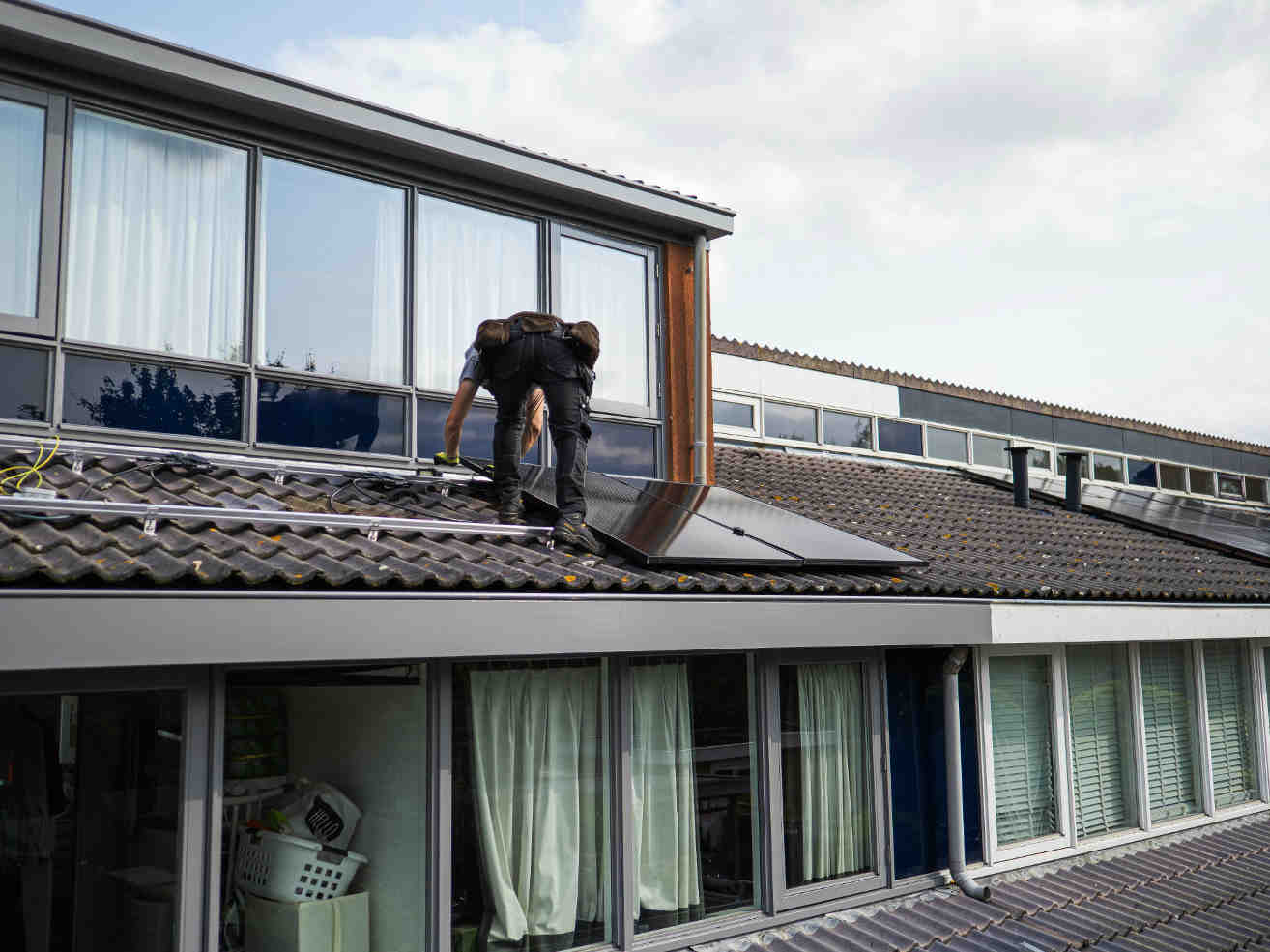
Installation sequence. Old roofing is removed, necessary repairs completed, new roofing installed, then solar mounting and panels added. The entire sequence is managed under one schedule with one point of contact.
Permitting and inspections. Sunwise handles all permit applications, inspections, and utility coordination through final system activation.
The result is a single, coordinated project rather than two contractors working around each other.
Financing a New Roof and Solar Installation
Many homeowners prefer financing both projects together rather than paying separately or managing multiple loans.
Combined financing options:
- Solar loans that include roof costs in the total project amount
- Home improvement loans covering both upgrades
- HELOC or home equity loans for larger combined projects
Bundled financing typically means one monthly payment, one interest rate, and one payoff timeline. For homeowners planning to stay in their home long-term, this simplifies budgeting and reduces administrative overhead.
Sunwise can discuss financing structures during your consultation and help you understand which approach fits your situation.
Is Bundling Right for You?
Bundling makes the most sense when:
- Your roof has less than 10–15 years of remaining life
- You’re seeing visible wear, repairs, or minor leaks
- You want one project, one timeline, one point of contact
- You plan to stay in your home long enough to benefit from aligned system lifespans
- You prefer predictable costs over potential surprise expenses later
If your roof is relatively new (installed within the last 5–10 years) and in good condition, solar can typically be installed without replacement. A professional assessment confirms which path makes sense.
How Sunwise Energy Can Help
Sunwise documents your roof’s condition and explains whether to install solar now, complete repairs first, or combine solar with a roof replacement. You get the assessment with photos, the options priced, and the reasoning behind the recommendation.
If you’re considering solar and wondering whether your roof should be part of the plan, we’ll give you a clear, documented assessment and explain your options.
Call (610) 228-2480 ext. 1 or schedule a roof and solar assessment to find out whether bundling is right for your home.
Frequently Asked Questions
Should I replace my roof before installing solar panels?
If your roof has less than 10–15 years of remaining life, replacing it before solar is usually the smarter financial decision. This avoids panel removal and reinstallation costs of $2,000–$5,000 or more later.
How much does it cost to remove and reinstall solar panels for roof replacement?
Panel removal and reinstallation typically costs $2,000–$5,000 depending on system size and complexity. Bundling roof and solar work eliminates this expense entirely.
Can I finance a new roof and solar installation together?
Yes. Many homeowners bundle both projects into a single financing plan for one predictable monthly payment rather than managing separate contractors, timelines, and loans.
Does Sunwise Energy do both roofing and solar?
Yes. Sunwise coordinates roof replacement and solar installation under one project, managing assessment, scheduling, permitting, and installation with a single point of contact.
How do I know if my roof needs replacement before solar?
Signs include: age over 15 years, visible wear like curling or cracking shingles, granule loss, previous leak repairs, or soft spots. A professional assessment confirms whether replacement is recommended.
What if my roof is in good condition?
If your roof has 15+ years of remaining life and shows no signs of wear, solar can typically be installed without replacement. We’ll document roof condition during assessment so you have a clear baseline.
How long does a combined roof and solar project take?
Timeline depends on roof size and system complexity, but most bundled residential projects complete within 2–4 weeks once permits are approved. Sunwise manages the full sequence so you’re not coordinating between contractors.