
Solar Panels on a Flat Roof
Flat roofs work well for solar. Learn about mounting options, structural needs, and how flat roof systems perform in PA, NJ, and DE.
In this article
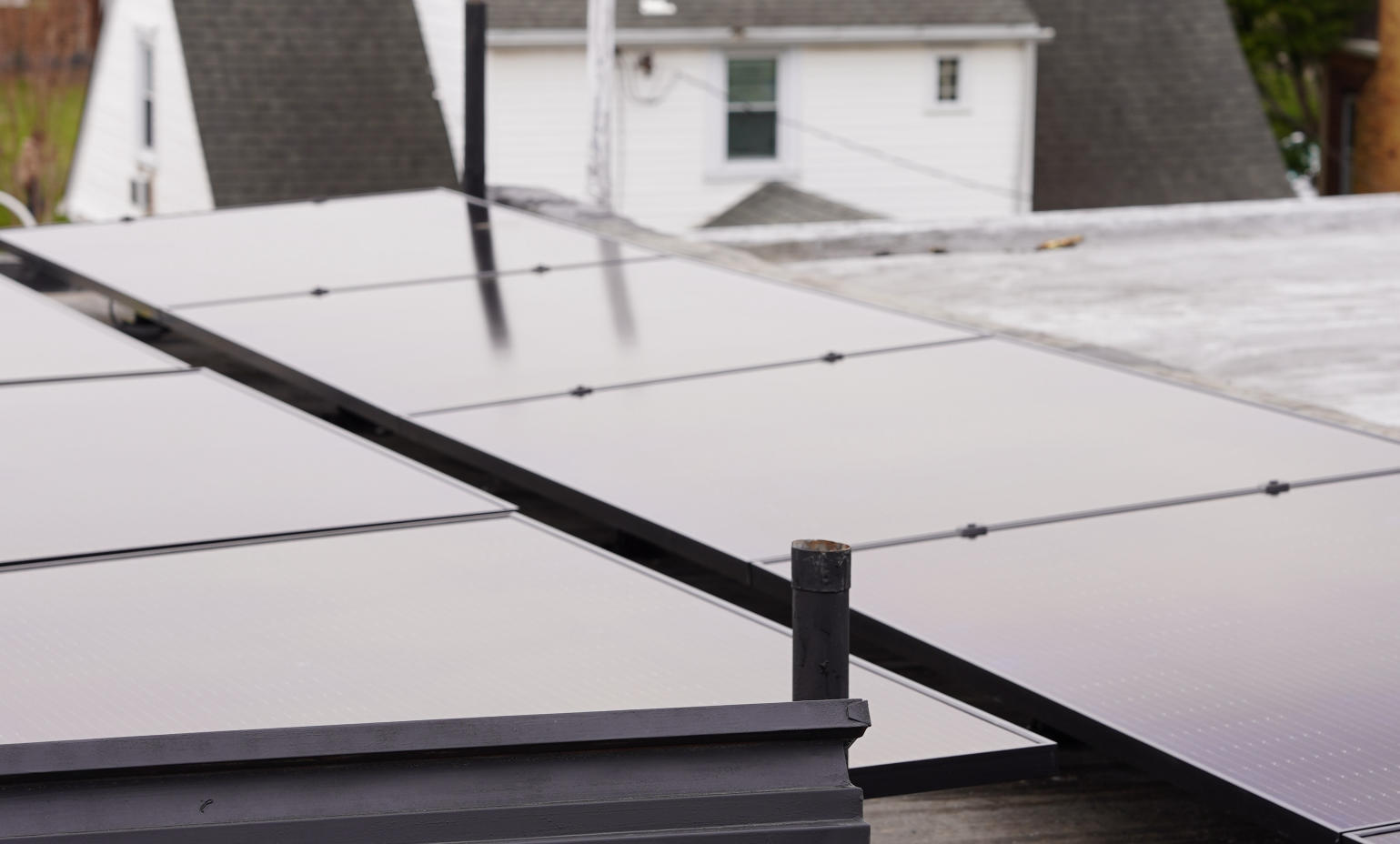
Flat roofs are common on commercial buildings, modern homes, and urban properties. They’re excellent candidates for solar. With the right design and mounting system, flat roof solar performs as efficiently as systems installed on pitched roofs, often with greater flexibility in panel placement and orientation.
The short answer: yes, solar panels work well on flat roofs. The longer answer involves understanding how mounting systems, structural considerations, and professional design come together to create a reliable, high-performing system.
Can You Install Solar Panels on a Flat Roof?
Solar panels can absolutely be installed on flat roofs, and in many cases, installation is more straightforward than on angled surfaces. Flat roofs provide a stable, accessible platform that allows installers to precisely control panel tilt and direction.
Because flat roofs lack natural slope, mounting systems angle panels toward the sun. In the Mid-Atlantic region, Pennsylvania, New Jersey, and Delaware, panels are typically tilted between 10 and 30 degrees south-facing, depending on roof layout and seasonal production goals.
This adjustability often allows flat roof systems to match or exceed the performance of pitched roof installations. Installers can optimize panel angles for your specific location rather than working around a fixed roof pitch.
Flat roofs are especially common in:
- Philadelphia rowhouses and urban properties
- South Jersey commercial buildings and retail centers
- Industrial properties and warehouses across PA and NJ
- Modern residential construction with contemporary architecture
Flat Roof Mounting Systems: Ballasted vs. Mechanically Attached
Flat roof solar systems rely on specialized mounting solutions. The two most common approaches are ballasted systems and mechanically attached systems.
Structural and Spacing Considerations
Before installation, a structural assessment is essential. Solar panels and mounting equipment add weight, and the roof must safely support that load while also withstanding wind uplift.
Older buildings or roofs nearing the end of their lifespan may require reinforcement or replacement before solar is installed. Membrane condition, drainage patterns, and existing rooftop equipment all factor into system design.
Spacing matters. Panel rows must be spaced to prevent self-shading, especially during winter months when the sun sits lower in the sky. This spacing requirement may limit total panel count on smaller flat roofs, but proper layout ensures consistent year-round production.
For a step-by-step overview of how solar projects are planned, see The Solar Installation Process.
Benefits and Tradeoffs of Flat Roof Solar
Is Your Flat Roof Ready for Solar?
Before moving forward, several factors determine whether your flat roof is a good candidate:
Roof condition. Membranes, drainage, and structural integrity should all be evaluated. If your roof is within 5–10 years of needing replacement, addressing that first prevents future panel removal costs.
Available space. Usable area after accounting for setbacks, equipment, and spacing determines system size potential.
Structural capacity. Engineering review confirms the roof can handle panel, mounting, and ballast weight (if applicable) plus wind and snow loads.
Drainage patterns. Solar installations shouldn’t interfere with roof drainage or create ponding issues.
Local permitting. Building codes, fire setbacks, and utility requirements vary by municipality across PA, NJ, and DE.
A professional assessment identifies opportunities and constraints so you can plan with confidence.
How Sunwise Energy Designs Flat Roof Systems
Sunwise Energy designs and installs custom solar systems for flat and pitched roofs across Pennsylvania, New Jersey, and Delaware. Our team handles structural review, permitting, and system optimization to ensure your roof is ready for decades of reliable performance.
We work with residential flat roofs, commercial properties, and industrial buildings, tailoring each system to the building’s specific conditions and the owner’s energy goals.
Call (610) 228-2480 ext. 1 or schedule a consultation to see how solar can work on your flat roof.
Frequently Asked Questions
Do solar panels work well on a flat roof?
Yes. With proper mounting and tilt angle, flat roof solar systems perform as efficiently as pitched roof installations. Flat roofs also offer flexibility in panel orientation and layout.
What is the best angle for solar panels on a flat roof?
In the Mid-Atlantic region (PA, NJ, DE), flat roof panels are typically tilted between 10 and 30 degrees south-facing for optimal annual production.
Do flat roof solar panels need more maintenance?
Flat roof panels may accumulate debris and snow more easily due to lower angles. Periodic cleaning and inspection help maintain performance, but overall maintenance requirements remain minimal.
How much does flat roof solar installation cost compared to pitched roofs?
Flat roof installations may cost slightly more due to specialized mounting systems and additional spacing requirements. However, easier access often reduces labor costs. A professional assessment provides the most accurate estimate for your specific building.