
Roof Space Requirements for Solar Panel Installations
Most homes need roughly 400 to 600 sq ft of usable roof space for solar. See how panel efficiency, orientation and shading affect your roof's potential.
In this article
Before choosing panels or exploring financing, one of the most important questions to answer is whether your roof has enough usable space for solar. Roof requirements depend on more than just total square footage; energy usage, panel efficiency, orientation, and shading all play a role.
The good news: most homes have more than enough suitable roof area for solar. Understanding how space is calculated helps set realistic expectations and ensures your system is designed to meet your energy goals.
How Much Roof Space Does a Solar System Need?
Solar systems are sized based on how much electricity you want to produce, not just how much roof space you have. Most residential panels today measure roughly 17–21 square feet each.
General guidelines:
- Each kilowatt (kW) of solar capacity requires about 50 to 60 square feet of panel area on a pitched roof
- A typical home system (8 to 10 kW) needs roughly 400 to 600 square feet of usable roof area once setbacks and spacing are included
- Higher-efficiency panels reduce the total space required
Most homes in Pennsylvania, New Jersey, and Delaware have enough usable roof space even after excluding shaded or north-facing sections.
Panel Efficiency Makes a Difference
Not all panels produce the same power per square foot. Higher-efficiency panels, like Q.CELLS panels with efficiency ratings above 20%, generate more electricity from the same roof area. This matters most for homes with limited space or challenging layouts.
If your roof is smaller than average, high-efficiency panels may allow you to meet your energy goals without needing every available square foot.
Residential vs. Commercial Roof Requirements
Residential systems are usually designed to offset a portion or all of a home’s annual electricity use. For most households, an 8–10 kW system fits comfortably on standard roof layouts.
Commercial rooftops support much larger systems but require additional spacing for walkways, equipment access, and fire code setbacks. Flat commercial roofs typically allocate closer to 100 square feet per kW, since panels are tilted and spaced apart to avoid self-shading.
For commercial projects, see Commercial Rooftop Solar Energy Systems.
How Orientation, Tilt, and Shading Affect Layout
Roof space isn’t just about size; it’s about quality. A smaller, well-oriented roof can outperform a larger roof with poor sun exposure.
Orientation. South-facing roofs produce the most energy in the Northern Hemisphere. East- and west-facing sections are often very workable, producing 80–90% of south-facing output. North-facing roof areas are typically excluded.
Tilt. Most pitched roofs in the Mid-Atlantic region already fall within an effective tilt range (15–40 degrees). Flat roofs use tilted racking to optimize angle.
Shading. Trees, chimneys, dormers, and neighboring buildings can reduce output. Modern system design accounts for shading patterns throughout the day and across seasons.
Regional Roof Considerations
Different home styles common in PA, NJ, and DE present different solar opportunities:
Philadelphia rowhomes often have limited south-facing exposure but can maximize east/west orientations with proper design.
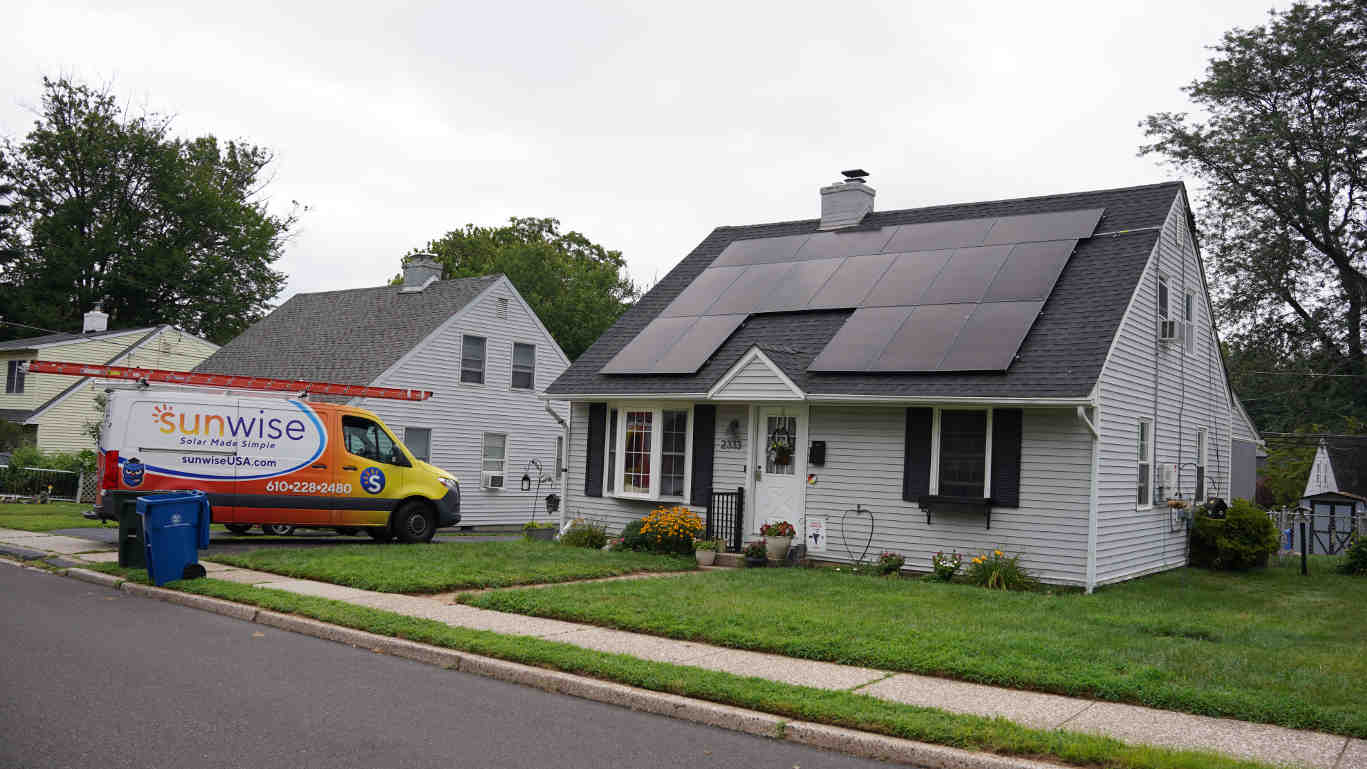
New Jersey Cape Cods typically have steep roof pitches that work well for solar, though dormers may reduce usable area.
Pennsylvania colonials often feature ideal roof pitch and orientation, with enough south-facing space for substantial systems.
A professional assessment identifies which roof sections are usable and how to maximize production from your specific layout.
How Sunwise Evaluates Your Roof
Professional solar design starts with a detailed assessment using aerial imagery, shade analysis software, and your energy data. Sunwise models different layouts to determine how much power your roof can realistically produce.
The evaluation typically includes:
- Usable roof area after excluding north-facing sections, shaded zones, and setbacks
- Structural suitability to confirm the roof can support panel weight
- Electrical capacity to ensure your panel can handle the system
- Obstruction mapping for vents, skylights, chimneys, and HVAC equipment
If roof limitations exist, options may include higher-efficiency panels, alternative layouts, or ground-mounted systems for properties with available land.
Making the Most of Limited Roof Space
Roof space rarely disqualifies a home from solar on its own. With modern panels and thoughtful design, many systems fit comfortably while delivering meaningful energy savings.
Strategies for smaller roofs:
- Use high-efficiency panels to maximize production per square foot
- Prioritize south-facing sections for the best-producing areas
- Consider battery storage to capture and use more of what you produce
- Optimize system size to match your actual usage rather than oversizing
The goal isn’t to cover every square foot, it’s to design a system that meets your energy goals within your roof’s constraints.
How Sunwise Energy Can Help
Sunwise Energy evaluates roof space, shading, and energy usage to design solar systems that make the most of what your property offers. Our team provides clear guidance on layout, performance expectations, and equipment options.
Call (610) 228-2480 ext. 1 or schedule a roof and energy assessment to see how solar could work for your home.
Frequently Asked Questions
How much roof space do I need for solar panels?
Most residential solar systems require roughly 400 to 600 square feet of usable roof space. Each kilowatt of capacity needs about 50 to 60 square feet of panel area on a pitched roof, depending on panel efficiency, with additional room for fire setbacks and spacing.
Can I install solar on a small roof?
Yes. Higher-efficiency panels produce more power per square foot, making solar viable on smaller roofs. A Sunwise assessment determines how much of your roof is usable and what system size fits.
Does roof direction matter for solar panels?
South-facing roofs produce the most energy, but east- and west-facing roofs are often very workable, typically producing 80–90% of south-facing output. North-facing sections are usually excluded.
How do solar companies evaluate my roof?
Sunwise uses aerial imagery, shade analysis tools, and energy data to model panel layouts and estimate production. An on-site visit confirms structural suitability, electrical capacity, and access.
What if my roof doesn’t have enough space?
Options include higher-efficiency panels, optimized layouts, or ground-mounted systems for properties with available land. A Sunwise assessment identifies the best approach for your situation.